What Recent State Investments Reveal About Site Selection Strategy
Why These State Investments Matter for Site Selection Strategy
The most successful site selection strategy decisions typically hinge on something fundamental. Recent announcements from Massachusetts, Missouri, Texas, and Florida illustrate a broader trend emerging across the economic development landscape. States, communities, ports, and development organizations are making strategic investments in innovation, site readiness, logistics infrastructure, and industrial development capacity to improve their competitiveness for future investment.
For site selectors and corporate decision-makers, these investments provide valuable insights into where future opportunities may emerge.
Massachusetts Continues Investing in Innovation Ecosystems
MassVentures recently announced $4.5 million in grants to 26 Massachusetts startups focused on life sciences, robotics, artificial intelligence, quantum computing, and clean energy through its START Grant Program. Since 2012, the program has awarded more than $46 million to companies that have raised over $5 billion in private capital and created more than 3,400 jobs. Notably, 65% of these companies are located outside the traditional Boston-Cambridge innovation hubs.
Why Innovation Ecosystems Matter for Site Selection
Innovation ecosystems rarely develop overnight. Programs that support commercialization, entrepreneurship, and technology development often strengthen:
- Skilled workforce availability
- Research partnerships
- Venture capital attraction
- Supplier ecosystems
- Long-term industry clustering
For companies considering technology, life sciences, or advanced manufacturing investments, the strength of a region’s innovation pipeline can be just as important as today’s operating costs.
Missouri Expands Its Inventory of Development-Ready Sites
One of the most important trends in modern site selection is the growing demand for shovel-ready sites. Missouri recently announced that the 43-acre East Technology Park in Mexico, Missouri, has achieved Missouri Certified Site designation, joining more than 45 development-ready sites across the state. The certification evaluates critical factors including utilities, site access, environmental conditions, land use compatibility, and development costs.
The Advantages of Certified, Development-Ready Sites
For corporate investors, certified sites can provide significant advantages:
- Reduced development uncertainty
- Faster project timelines
- Improved permitting readiness
- Better understanding of site costs
- Lower implementation risk
In today’s environment, project schedules are often measured in months rather than years. Communities that invest in site readiness are positioning themselves to compete more effectively for advanced manufacturing, food processing, logistics, and distribution projects.
North Texas Continues to Build Industrial Capacity
The Dallas-Fort Worth Metroplex remains one of the nation’s most active industrial development markets. Jackson-Shaw recently broke ground on Horizon 35 in Denton, Texas, a master-planned business park that will ultimately exceed 900,000 square feet. The project benefits from direct access to Interstate 35, Loop 288, and U.S. Highway 77.
At the same time, Stonepeak acquired an 860,100-square-foot rail-served logistics site in Fort Worth’s Alliance submarket, where access to Class I rail service, an intermodal terminal, cargo airport infrastructure, and the I-35 trade corridor creates significant logistics advantages.
Transportation Infrastructure as a Site Selection Predictor
These announcements reinforce a key site selection principle: transportation infrastructure remains one of the strongest predictors of long-term industrial competitiveness. Companies increasingly evaluate locations through the lens of end-to-end supply chain efficiency, considering:
- Rail access
- Intermodal connectivity
- Highway infrastructure
- Air cargo capabilities
- Distribution network optimization
Locations that provide multiple transportation options often create operating cost advantages far beyond the initial incentive package.
Port Everglades Demonstrates the Importance of Logistics Infrastructure
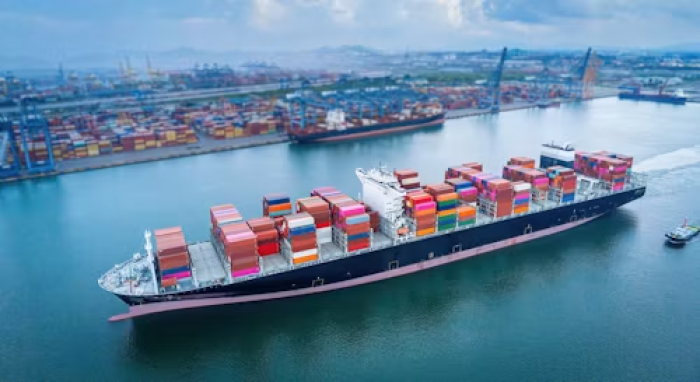
In Florida, Port Everglades recently welcomed the largest cargo ship ever to call at the port, the MSC Vandya, a vessel capable of carrying more than 13,000 TEUs. The milestone highlights both the importance of maritime infrastructure and the continuing need for strategic investment in port improvements.
The ongoing Port Everglades Navigation Improvements Project is designed to deepen and widen navigation channels, increasing capacity and improving the port’s ability to accommodate larger vessels. At the same time, new shipping services are strengthening direct trade connections between Florida and Asia.
How Port Infrastructure Influences Site Selection
For manufacturers, distributors, importers, and exporters, port infrastructure can significantly influence:
- Transportation costs
- Supply chain reliability
- Delivery schedules
- Inventory management
- International market access
As global supply chains continue to evolve, locations with strong maritime connections may offer meaningful competitive advantages.
The Bigger Economic Development Story
Although these announcements span different industries and geographies, they reveal a common theme: the regions attracting future investment are investing today in the assets that make investment possible. Those assets include:
- Innovation ecosystems
- Development-ready sites
- Transportation infrastructure
- Logistics networks
- Workforce development
- Industrial capacity
The strongest locations understand that incentives alone are not enough. They are building the talent, infrastructure, and development environments that allow businesses to scale efficiently and operate competitively for decades.
What This Means for Site Selection Strategy
Organizations evaluating expansion, relocation, or capital investment opportunities should look beyond the headline incentive package. Questions worth asking include:
- Is the region investing in future workforce and innovation capacity?
- Are development-ready sites available, and how “development-ready” are the sites?
- How strong is the transportation and logistics infrastructure?
- What future infrastructure improvements are planned?
- How will these investments impact long-term operating costs and risk?
The answers often have a greater influence on project success than incentives alone.
The Competitive Advantage Companies Should Be Seeking
The best site selection decisions occur when incentives align with workforce availability, infrastructure readiness, logistics advantages, and long-term growth opportunities. Communities that invest in these fundamentals create environments where businesses can grow, innovate, and compete more effectively.
For corporate decision-makers, these investments provide valuable signals about which regions are positioning themselves for future success.
Let’s Talk About Your Next Project
Whether you’re evaluating a manufacturing facility, technology investment, distribution center, headquarters location, or expansion project, understanding how infrastructure, workforce, site readiness, and incentives work together is essential to achieving the best outcome.
At Ashmore Consulting, we help organizations:
- Identify and evaluate optimal locations
- Quantify state and local tax credits and incentives
- Assess workforce and infrastructure readiness
- Analyze long-term operating cost impacts
- Negotiate incentive packages that maximize value and reduce risk
If your organization is planning a capital investment, expansion, relocation, or redevelopment project, let’s discuss how a strategic site selection and incentives approach can improve ROI, reduce risk, and create long-term competitive advantage. The most attractive locations aren’t simply offering incentives — they’re building the foundation for business success long before a project begins.
The information contained herein is general in nature and is not intended and should not be construed as legal, accounting, or tax advice or opinion provided by Ashmore Consulting LLC to the reader. The reader is also cautioned that this material may not be applicable to, or suitable for, the reader’s specific circumstances or needs and may require consideration of non-tax and other tax factors if any action is to be contemplated. The reader should contact Ashmore Consulting LLC or another tax professional prior to taking any action based upon this information. Ashmore Consulting LLC assumes no obligation to inform the reader of any changes in tax laws or other factors that could affect the information contained herein.
 Ashmore Consulting is proud to join Pledge 1%, a global movement creating new normal where companies of all sizes integrate giving back into their culture and values. Pledge 1% empowers companies to donate 1% of product, 1% of equity, 1% of profit or 1% of employee time to causes of their choice. Over 1,500 companies in 40 countries have taken the Pledge and committed to give to communities around the world. Ashmore Consulting is excited to join Pledge 1%’s network of founders, entrepreneurs and companies around the globe that have committed to giving back.